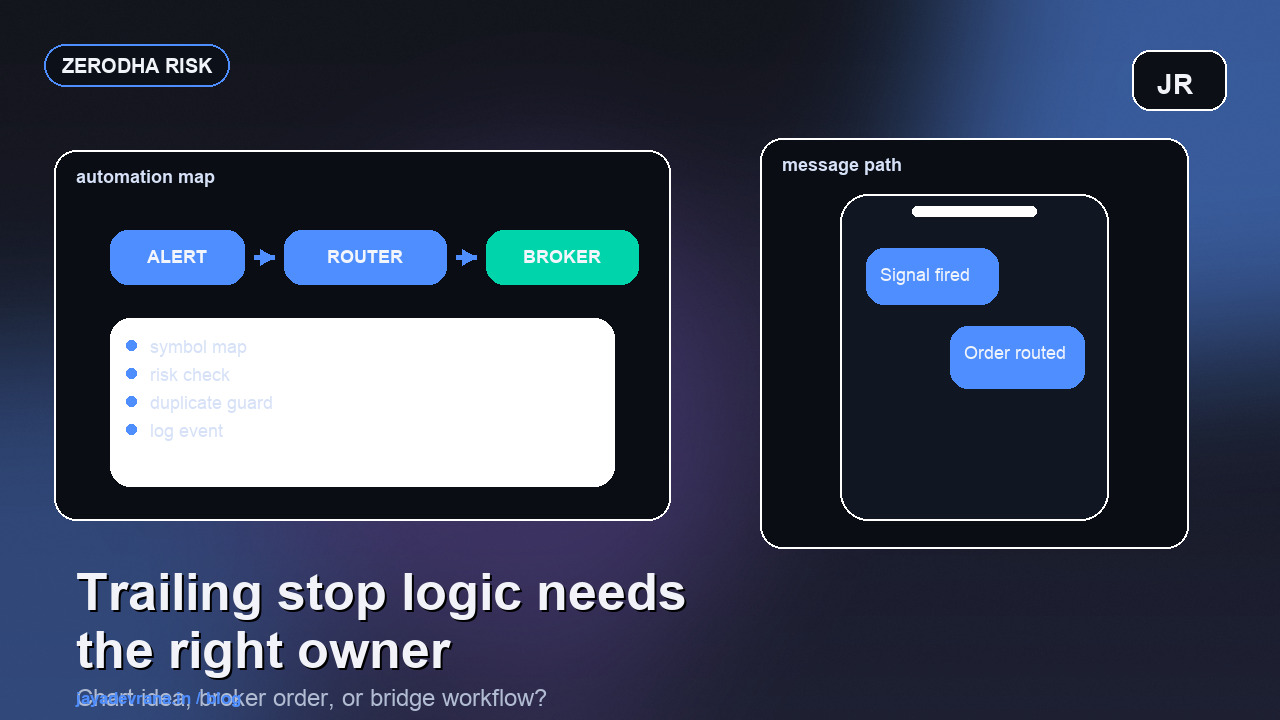
Why Zerodha trailing stop loss is often explained badly
When traders say they want a Zerodha trailing stop loss, they may mean one of three different things. They may want a manual order workflow on Kite. They may want Pine logic that trails a stop on the chart. Or they may want a TradingView-to-broker automation layer that updates risk as the trade moves. Those are related, but they are not the same job.
That is why this topic gets muddled so easily. The trailing idea sounds simple, but the implementation layer decides what is actually possible and how safe it is.
What Zerodha's own order support tells you
Zerodha's support material is helpful because it shows the broker-side constraints clearly. Bracket Orders were stopped years ago, and cover orders still exist as a specific intraday workflow with a mandatory stop-loss component. Zerodha also documents how stop-loss trigger prices work and how target plus stop-loss handling behaves for open futures positions.
- do not assume old bracket-order tutorials still apply
- know the difference between a trigger price and the price that becomes the actual order
- if you are running an automation stack, model the broker constraints first
- treat the broker order model as part of the strategy design
Where trailing logic should usually live
If the goal is research, the trailing stop can live inside Pine so you can test the behavior. If the goal is a live broker workflow, the live execution layer needs to own it. That execution layer might be the broker interface, an intermediate bridge, or a custom execution app.
The mistake is believing the chart and the live broker book are automatically the same thing. They are not.
A practical way to think about the build
I usually break the project into three questions. What starts the trail? What updates the trail? And which system has authority to place or move the live stop? Once those answers are clear, the build itself becomes much easier.
If the trade logic already exists and the blocker is the execution design, send the market, product type, and how you want the stop to trail on WhatsApp. That is usually enough to tell whether the clean answer is Pine, broker-side handling, or a bridge layer.
WhatsApp for a 3-minute quoteWhat to read next
If this topic is part of a bigger TradingView or Pine Script workflow for you, these are the most useful follow-up guides on the site.
- How to Add a Trailing Stop Loss in Pine Script
- TradingView to Zerodha Automation
- TradingView Webhook JSON for Indian Brokers
Send the chart idea, broker, market, and goal on WhatsApp. I can usually tell you quickly whether it needs a custom indicator, a strategy audit, an alert fix, or a broker-ready automation layer.
Related services
Frequently asked questions
Is a Zerodha trailing stop loss the same thing as a Pine Script trailing stop?
No. The Pine idea may describe the logic, but the live implementation still depends on the broker workflow or execution layer that owns the actual order.
Can I rely on old bracket-order tutorials for Zerodha?
No. Zerodha stopped Bracket Orders years ago, so older tutorials often describe a workflow that is no longer the right reference point.
What matters most in a trailing stop workflow?
Knowing which layer starts the trail, which layer updates it, and which layer is responsible for the live order at the broker.
Should the trail be tested in Pine first?
Usually yes. Pine is a good place to test the behavior conceptually before you wire it into a broker-aware live workflow.
Primary sources and references
I take on Pine Script indicators, TradingView automation layers, strategy audits, and broker-aware execution workflows when the goal is clear and the live behavior actually matters.