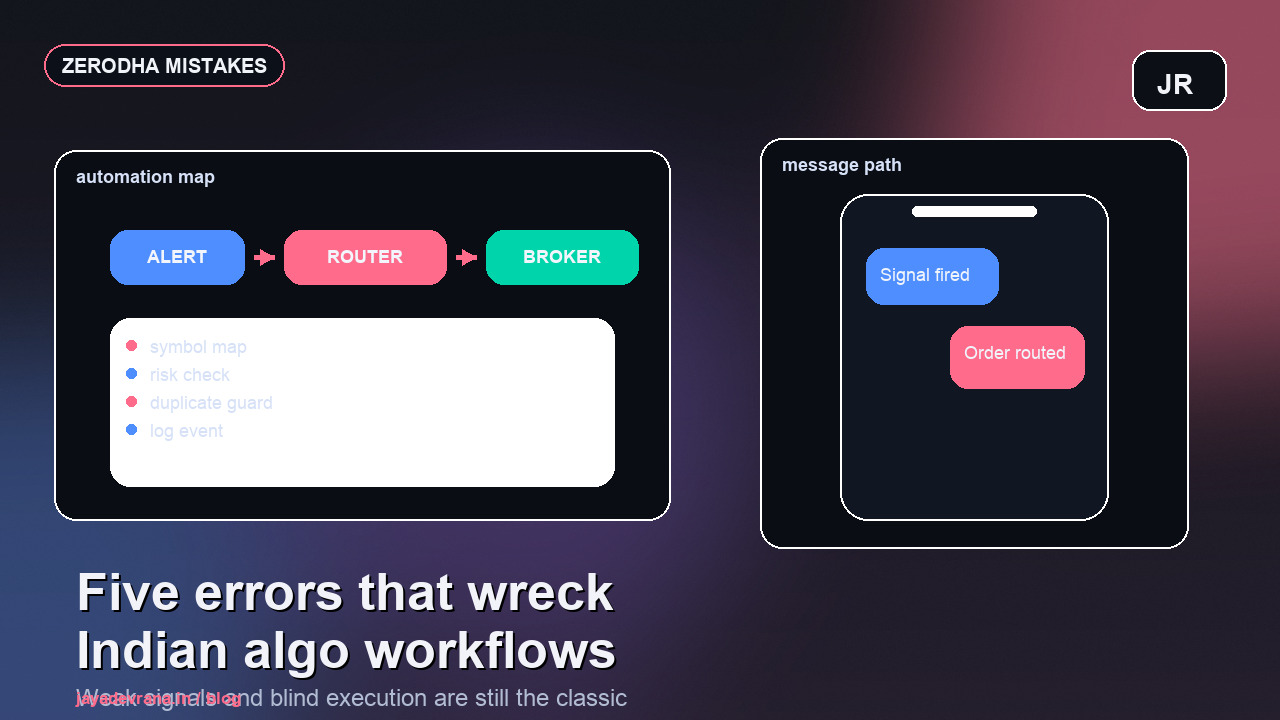
Mistake 1 and 2: weak signals and blind execution
The first two mistakes usually happen together: the strategy rules are vague, and the execution layer is asked to compensate. It never does. If the alert is unclear, the live trade chain becomes unclear too.
- Vague chart logic masquerading as a real strategy
- Raw alerts being treated like order instructions with no validation
Mistake 3 and 4: poor broker-state visibility and no controls
The third mistake is not knowing what actually happened after the order request. The fourth is not having a proper stop switch when behavior turns strange. Those are operator failures, not just technical quirks.
- No reliable order-state monitoring after request submission
- No kill switch, pacing logic, or duplicate-event protection
Mistake 5: ignoring the current Indian operating context
The fifth mistake is treating automation as if it were still only a technical experiment. As of April 1, 2026, the retail algo framework applies across stock brokers, which means workflow clarity, logs, and broker-aware design deserve more respect than ever.
- Use explicit strategy names and versions.
- Keep logs for alerts, decisions, and broker responses.
- Review the workflow as an operator would, not just as a coder.
- Make every part of the chain explainable afterward.
I audit Zerodha and TradingView stacks for alert quality, routing logic, duplicate protection, and state visibility before those mistakes become expensive.
WhatsApp for a 3-minute quoteWhat the fix looks like in practice
- Clear strategy logic
- Controlled alert payloads
- Dedicated validation and broker routing
- State monitoring and manual override controls
Send the chart idea, broker, market, and goal on WhatsApp. I can usually tell you quickly whether it needs a custom indicator, a strategy audit, an alert fix, or a broker-ready automation layer.
Related services
Frequently asked questions
What is the most common Zerodha algo mistake?
Automating unclear strategy rules and expecting the broker-side code to make the idea disciplined later.
Why do duplicate trades happen?
Usually because alerts, reconnects, or routing logic do not have proper duplicate-event protection and state checks.
Is this mainly a coding problem?
Not usually. It is often a workflow-design problem that happens to show up in code.
Why does the April 1, 2026 date matter?
Because the retail algo framework applies across stock brokers from that date, making broker-aware and auditable design more important than before.
Primary sources and references
I take on Pine Script indicators, TradingView automation layers, strategy audits, and broker-aware execution workflows when the goal is clear and the live behavior actually matters.