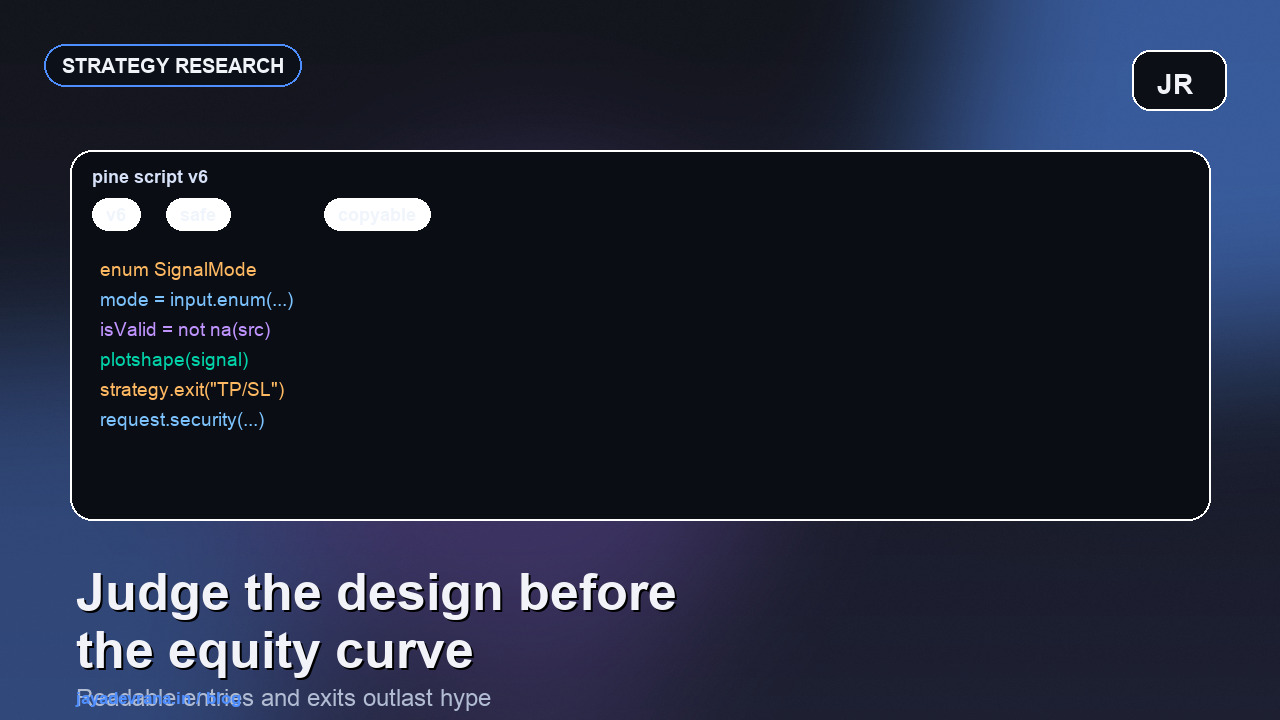
Why the word best is usually the wrong starting point
Most searches for the best TradingView strategies are really searches for a shortcut. That shortcut usually does not exist. A strategy that works well on index trend days can be a mess in a slow mean-reverting session. A strong crypto breakout system can be terrible on a sleepy stock chart.
The better question is not which strategy is best in the abstract. It is which structure still behaves honestly once entries, exits, spread, confirmation, and execution assumptions are all made explicit.
The strategy categories that still deserve respect
- trend-following systems with clear invalidation and no fake precision
- volatility breakout systems that respect session context
- mean-reversion systems with hard constraints and realistic exits
- hybrid systems that stay readable instead of stacking random filters
None of those categories is automatically superior. What matters is whether the strategy logic matches the market you are applying it to and whether the code tells the truth about how it behaves.
A simple v6 strategy skeleton that is easier to judge
This is not a claim of best performance. It is a small structure showing how I prefer to keep entry and bracket exit logic readable before doing any real research work.
//@version=6
strategy("Bracket exit template", overlay = true, initial_capital = 100000)

fast = ta.ema(close, 20)
slow = ta.ema(close, 50)
longSignal = ta.crossover(fast, slow)

if longSignal
    strategy.entry("L", strategy.long)

if strategy.position_size > 0
    stopPrice  = strategy.position_avg_price * 0.99
    limitPrice = strategy.position_avg_price * 1.02
strategy.exit("L exit", from_entry = "L", stop = stopPrice, limit = limitPrice)How I tell whether a strategy idea is worth more time
I want three things early: the setup should make sense in plain language, the exits should be explicit, and the live assumptions should be visible. If one of those is missing, the strategy may still be interesting, but it is not mature enough to trust.
If you already have a Pine Script strategy and want a clearer view of whether the logic is worth improving, send the rules or the script on WhatsApp. I usually start by checking the premise before touching the cosmetics.
WhatsApp for a 3-minute quoteWhat to read next
If this topic is part of a bigger TradingView or Pine Script workflow for you, these are the most useful follow-up guides on the site.
- Pine Script Backtesting Guide
- Trailing Stop Loss in Pine Script
- Multiple Take Profit Targets in Pine Script
Send the chart idea, broker, market, and goal on WhatsApp. I can usually tell you quickly whether it needs a custom indicator, a strategy audit, an alert fix, or a broker-ready automation layer.
Related services
Frequently asked questions
Is there one best TradingView Pine Script strategy for every market?
No. Strategy quality always depends on the market, timeframe, exit logic, and operator assumptions.
What is the fastest way to judge a strategy?
Check whether the entry, invalidation, and exit logic make sense in plain English before you get excited about performance metrics.
Should I trust public strategies with perfect screenshots?
Only after checking how they behave live, how exits are handled, and whether the script is hiding assumptions that the chart view makes easy to miss.
What category is safest for beginners to research first?
Usually simple trend-following or breakout structures, because the signal definition tends to be easier to explain and test.
Primary sources and references
I take on Pine Script indicators, TradingView automation layers, strategy audits, and broker-aware execution workflows when the goal is clear and the live behavior actually matters.